Fantasy Cricket Differential Picks — How To Win IPL 2026 Mega Contests With Low-Ownership Captains on Cricplay
Differential captain picks win mega contests. Here is how to identify low-ownership fantasy cricket captains on Cricplay, when to back them, and the seven differential profiles that consistently finish top-10 in IPL 2026 leaderboards.
#Differential Picks#Captain Strategy#IPL 2026
If you have played a 50,000-entry mega contest on Cricplay and watched your team finish 4,200th, you already know the painful truth: ownership is destiny in fantasy cricket. When 78% of the field captains the same player and he scores 60 points, your captain earns 120. But so does everyone else — and a 120-point captain anchored in 78% of the leaderboard is the mathematical floor, not the ceiling. The path to top-10 in any mega contest runs through differentials — low-ownership players, mostly captains, whose boom days lift only your team and leave the rest of the field stuck at the median.
This guide is the Cricplay differential playbook for IPL 2026. You will learn what a differential actually is, the seven profiles that have historically delivered top-10 mega finishes, the selection-rate windows where differentials are most powerful, and the exact steps you should run 90 minutes before toss to lock a captain who the rest of the field is sleeping on. You will also see how Cricplay surfaces ownership data inside the lobby and which contests are best suited for a differential-heavy build.
What "differential" actually means in fantasy cricket
In casual fantasy cricket circles, a "differential pick" is any player that fewer than 15% of teams own. In mega contests on Cricplay — the 10,000-entry, 50,000-entry and 100,000-entry formats — the strictest definition applies: your differential is anyone outside the top-3 captain and top-3 vice-captain selections for that match. Anything owned by more than 30% of teams is, by mega-contest standards, "chalk". Chalk wins small. Differentials win mega.
Three numbers matter when you evaluate a differential candidate: ownership percentage (the smaller the better, with anything under 10% carrying serious upside), ceiling fantasy points (the realistic best-case, usually 1.5x to 2x their recent average), and matchup fit (their opponent's bowling/batting weakness relative to their skill). When a player checks all three boxes — sub-10% ownership, 80+ ceiling, exploitable matchup — they enter the "high-conviction differential" tier. These are the names that lift a 12,000th-place team into top-500.
Cricplay exposes ownership inside the lobby before each contest lock. Tap any match, then tap "ownership" on the team-builder screen, and the player list re-sorts by captain ownership percentage. Anything under 15% carries a teal "DIFF" badge — that is your shortlist feed. From there, the analysis is yours.
The seven differential profiles that win mega contests
Over the last four IPL seasons, the top-10 finishers in mega contests on major fantasy apps have shared a remarkably consistent profile set. They do not all pick the same archetype — that would defeat the purpose — but they all pick from one of seven profiles. If you commit to scouting two or three of these profile types per match, you will have a high-conviction differential captain almost every game.
Profile 1 — The rested specialist. A player who sat out 2-3 matches (injury, rest, rotation) and is now confirmed back in the XI on a flat pitch. The field assumes his match fitness is shaky, so ownership stays under 10%. If he plays the full 20 overs and gets a role he is comfortable in, his ceiling is identical to his pre-rest peak. Mitchell Marsh returning from a hamstring strain in 2024 is the textbook case — he scored 71* on comeback, was owned by 8% of captains, and powered several top-50 finishes.
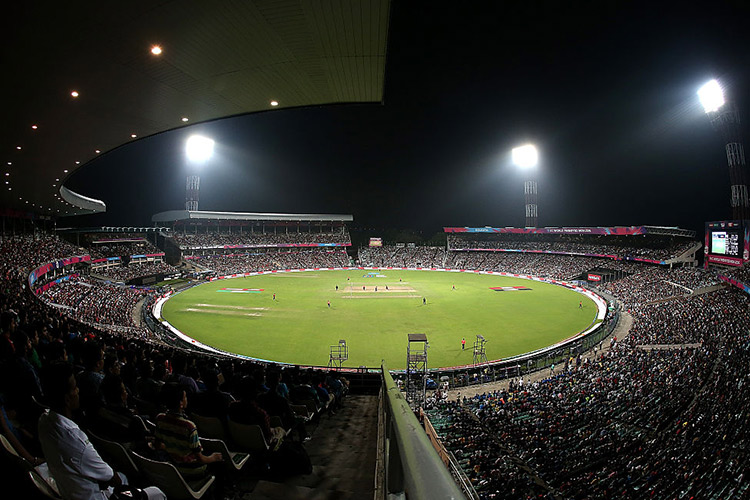
Profile 2 — The boundary hitter on a small ground. Eden Gardens, Wankhede and Chinnaswamy inflate boundary counts by 25-40% versus the season average. A power-hitter with a strike rate above 160 who is set to play at one of these venues usually clears 60 fantasy points when he reaches 35+ runs. The field underweights venue because the Cricplay default sort is by recent form, not by venue-adjusted form. You have to do the venue math yourself.
Profile 3 — The second-spell wrist-spinner. Wrist-spinners (chinaman, leg-break) introduced in the 8-12 over window against a batting order heavy on left-handers or right-handers weak against turn. Ownership hovers around 12-18% because they are not "household" picks, but their wicket probability in that specific match-up is 30% higher than a finger-spinner. Rashid Khan is the obvious one; lesser-known wrist-spinners in the 8-14 overs carry similar matchup leverage at 5% ownership.
Profile 4 — The impact-player batting finisher. A lower-order hitter promoted to bat at 5 or 6 because the team's top-order has been failing. The Cricplay lobby shows batting position only after the playing XI is announced, so this profile is invisible to anyone who builds their team before toss. Owners who switch in late catch a 60+ ceiling at 6% ownership. The trade-off is risk — if the top-order does fire, your finisher never comes in to bat.
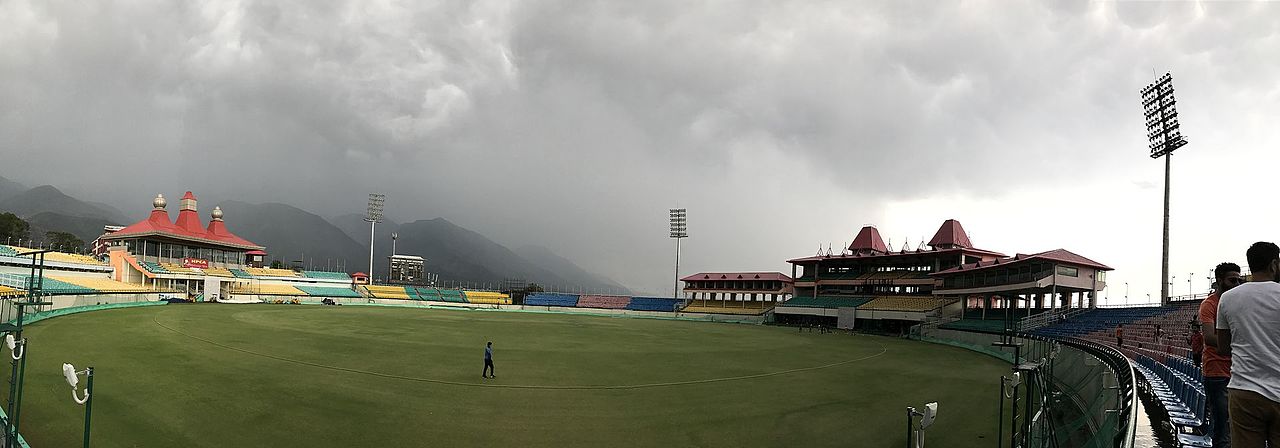
Profile 5 — The away-from-home pace spearhead. A fast bowler playing at a venue with pace and bounce (Dharamsala, Mumbai, Bengaluru) against a batting order that struggles against short-pitched bowling. These spells routinely produce 4-wicket hauls worth 80+ fantasy points. Ownership sits at 11-14% because the casual eye skips fast bowlers in T20. They should not be skipped.
Profile 6 — The promoted keeper-batter. A wicketkeeper-batter elevated up the order due to an injury or form reset for an in-form player. Ishan Kishan, Jitesh Sharma and Dhruv Jurel all entered low-ownership windows at various points in 2024-25 when batting position changed. Their dual-scoring (batting + dismissals) makes them disproportionately valuable captain picks when their role changes.
Profile 7 — The bowler-batter all-rounder on a batting track. Hardik Pandya, Sunil Narine, Marcus Stoinis and Andre Russell — the high-impact all-rounders — get a captain boost every time they play at a venue where their batting is more valuable than their bowling. On flat tracks, their captain ceiling is 100+; the field captain-picks them anyway, so they are sometimes a chalk pick. But on pitches where their bowling is the primary value (Dharamsala, Lucknow), they slip to 25% captain ownership, and the differential leverage returns.
The 90-minute pre-toss checklist for differential selection
Differential picks are not blind bets — they require a 90-minute pre-toss ritual. Run through this checklist before every contest locks on Cricplay:
Step 1 — Pitch report (45 minutes before toss). Read the curator's quotes, look at the average first-innings score at this venue across the last three seasons, and check whether the surface is bare or grass-covered. Flat pitch = chase-favouring, targets 190+, differentials lean to power-hitters. Sticky pitch = defend-favouring, targets 150-160, differentials lean to bowlers who can exploit turn or seam.
Step 2 — Confirmed XIs (30 minutes before toss). Once toss is announced, Cricplay surfaces the playing XI in green badges. Sort by role and look for two signals: (a) a returning player (Profile 1), or (b) an unexpected promotion/demotion. Either is a differential entry point.
Step 3 — Ownership sweep (15 minutes before toss). Open the Cricplay captain ownership tab. Identify the top-3 captain picks — these are chalk. Then scroll to the bottom of the list and find any player under 8% who has 60+ ceiling. That is your differential candidate pool.
Step 4 — Matchup check (5 minutes before toss). Compare your differential shortlist against the opposing team's recent batting order. Does your candidate's specific skill (left-arm wrist-spin, short-pitched bowling, power-hitting against pace) exploit the top-5 batters they will face? If yes, lock them as captain. If no, fall back to a higher-ownership safer pick.
Step 5 — Cash vs Mega discipline. The final rule, and the one most players ignore. Never deploy your top differential in a small-headcount cash contest. Cash contests reward consistency; differentials are volatility plays. Reserve them for 5,000+ entry mega formats on Cricplay where top-10 finishes pay 4-7 figure prizes.
How Cricplay surfaces differential data inside the app
Cricplay has built three tools specifically to help you find differentials without leaving the lobby. The first is the ownership badge — players under 15% captain ownership carry a small teal "DIFF" tag on their card. The second is the venue filter — tap any player, then "Venue history" to see their last five scores at that ground. The third is the "Matchup view", which shows the candidate's strike rate and economy against the specific bowlers/batters in the opposing XI.
None of these tools tell you which player to captain — that judgment is yours. What they do is shrink the research window from 30 minutes to under 5. You can build a fully-analysed differential team in the time it takes the casual player to copy the top-3 captain list. That time advantage compounds across a 74-match IPL season: the differential who lifts your team from 12,000th to 480th in match 14 is the same differential who lifts you from 6,200th to 220th in match 38. Run the process every match, and the leaderboard finishes itself.
Bankroll management for differential-heavy builds
Differential strategies are inherently higher-variance than chalk strategies. You will finish top-50 in some mega contests, and you will finish 30,000th in others where your captain scored 8 points. The discipline is bankroll allocation. Most serious Cricplay players run differential-heavy builds in 30-40% of their mega entries and chalk-heavy builds in the remaining 60-70%. The differential entries pay for themselves when they hit; the chalk entries keep you in the game every week.
A second discipline is contest selection. Do not play differentials in contests with under 500 entries — the prize pools are too small to justify the variance. Save them for the 10,000+ entry mega formats, the 50,000-entry IPL special events, and the 100,000-entry season finale. The variance is the same; the rewards are 20-50x larger.
Common differential mistakes and how to avoid them
The first mistake is chasing ownership that is "too low" — sub-3% ownership usually means the player is not in the XI, or is in the XI in a role that does not score (lower-order batting, middle-overs containment). Stay in the 5-12% band: low enough to be a real differential, high enough to confirm the player is selected and in a scoring role.
The second mistake is ignoring role changes inside a single season. A player who was a top-order bat in match 5 may be batting at 7 by match 35. Cricplay's role-change log on each player profile flags this — tap it before every contest to see whether the role you remember is still the role they have today.
The third mistake is double-differential captain + vice-captain. If you captain a 6% player and vice-captain another 6% player, you have zero fallback when both fail. Run a 6% captain with a 28% vice-captain, or vice-versa, so your team has at least one anchor if both differentials fail. Pure double-differential teams win mega contests roughly 1 in 80 mega entries; mixed captain/vice builds win at 1 in 30.
The fourth mistake is differential fatigue. Chasing a differential every single match for 74 matches burns through your bankroll before the playoffs. Pick your spots — back-to-back away matches, rest-day returns, debut matches, and high-scoring venue games are the highest-leverage differential windows. Skip the routine home games where chalk wins the day.
Putting it together — your IPL 2026 differential plan
Open Cricplay the night before every match and shortlist three differential candidates using the ownership tab. Cross-check their ceiling, matchup and venue fit the next morning 90 minutes before toss. Lock the highest-conviction one as captain in 30-40% of your mega entries, and run a chalk captain in the rest. Track every differential pick in a spreadsheet — what you picked, the ownership, the final score, the rank uplift — and after 15 matches you will know which of the seven profiles works for your reading style.
The 74-match IPL 2026 schedule gives you roughly 25-30 high-leverage differential windows. Even if your hit rate is a modest 35%, that is 9-10 mega contest top-500 finishes — which on Cricplay's prize structure pays Rs 25,000-Rs 2,50,000 per hit depending on the contest size. The math works. The process works. The only variable is whether you commit to running the checklist every match.
If you want a head start, we have already mapped the seven profiles to specific player names in our fantasy cricket hub — including the boundary-hitters on small grounds, the second-spell wrist-spinners, and the promoted keeper-batters who will enter low-ownership windows during the second half of the season. The hub refreshes weekly through IPL 2026, so bookmark it and check back after every matchday. The differential edge is real, but only for players who do the work.
Play fantasy cricket on Cricplay
Download the Cricplay app and join IPL 2026 mega contests with Rs 100 welcome bonus.