Home/Fantasy Cricket/Fantasy Cricket Death Over Bowler Picks — IPL 2026 Captain Cheat Sheet
2026-07-15By Cricplay Fantasy Desk•9 min read
Fantasy Cricket Death Over Bowler Picks — The IPL 2026 Yorker-Slower Ball Cheat Sheet for Cricplay Mega Contests
Death-over bowling wins T20 fantasy leagues. Here is the Cricplay IPL 2026 cheat sheet for picking yorker-and-slower-ball specialists, the seven profiles that deliver 80+ fantasy points at the death, the venue filters that surface hidden gems, and the contest windows where death-bowler captains outscore chalk picks by 60+.
#Death Overs#Yorker Bowlers#IPL 2026
If you have ever captained a 38-year-old top-order bat on Cricplay who scored 8 off 14 balls while the opposing team's death bowler ran through the lower order for a 4/18 finish, you have already learned the lesson most fantasy players refuse to learn: the captain pick that wins you a mega contest in IPL 2026 will, more often than not, be a death-over specialist — not the marquee batter everyone else is on. When 80% of the field captains a 60-point batter and your skipper is the 4-wicket yorker bowler who finished with 92 points, your team climbs past 40,000 other entries in a single afternoon. Death bowling is the highest-leverage fantasy skill the casual market undervalues, and it is the one skill you can systematically exploit on Cricplay across the full IPL 2026 schedule.
This guide is the Cricplay playbook for death-over captaincy in IPL 2026. We will walk through why the death phase is a structural fantasy goldmine, the seven profiles that consistently deliver 80+ at the death, the venue filters that surface 4-wicket hauls, the contest formats where death-bowler captains are most rewarding, and the exact pre-toss checklist we run 90 minutes before every match to lock a death-over captain who lifts us from the median into the top-500.
Why death-over bowlers are T20 fantasy gold
In T20 cricket, the death phase — overs 17 through 20 — is where matches are won and lost, and where fantasy points are compounded most aggressively. A fast bowler who takes 3 wickets in the death phase for 18 runs in 4 overs earns 4 × 25 (wickets) + 18 (dot balls bonus) + 8 (LBW / bowled bonus) + 4 (maiden over if applicable) — a fantasy point total that routinely crosses 90 without any batting contribution. By contrast, a top-order batter who scores 45 off 32 balls at the top earns roughly 50-55 fantasy points: a respectable score, but one the captaincy multiplier can only double.
The asymmetry compounds because of how captaincy works. If your captain is the top-order batter, his 2x multiplier turns a 55-point afternoon into 110. If your captain is the death bowler, his 2x turns 92 points into 184. The chalk captain ends up at 110, your death-bowler captain ends up at 184, and the differential gap — exactly the gap that separates mega-contest winners from mega-contest losers — sits at 74 points. That 74-point gap translates into leaderboard jumps of 5,000 to 40,000 positions per contest, depending on the entry count.
This is not a marginal effect. In every IPL mega contest on Cricplay since 2023, the top-10 finishers' captain has been a death-over bowler in 35-45% of winning entries. The marquee batter is the chalk captain; the death bowler is the winning captain. The market has not yet repriced the death phase as the dominant fantasy skill, and that repricing lag is the edge you can capture every matchday for the next 14 weeks.
The seven death-bowler profiles that win IPL 2026 mega contests
Not every death bowler qualifies as a fantasy captain pick. The differences in skill profile, role, and matchup surface seven distinct categories — and within each category, two or three names consistently deliver 80+ fantasy points per match. If you scout two or three of these profiles per match, you will have a high-conviction death-bowler captain almost every game.
Profile 1 — The yorker-king specialist. Bowlers who command the wide-off-stump and toe-crushing yorker line at speeds above 135 kph. Their identity is the hard yorker, and they hit it 60-70% of the time in the death overs. Jasprit Bumrah, Matheesha Pathirana, Andre Russell (in his last IPL), and T Natarajan are textbook examples. When this profile is on, they take 2-3 wickets and concede under 30 runs in 4 overs — fantasy scores of 75-95. When they are off, they leak 50+ and you lose 30 leaderboard positions per contest. Run them only when the opposing batting order has at least three right-handers or left-handers weak against the angle.
Profile 2 — The slower-ball disruptor. Pacers who break the pace rhythm with off-pace cutters, knuckle balls, and hard-length slower ones. Their identity is the change of pace — they bowl the same action but the ball comes out 15-25 kph slower, completely disrupting the batter's weight transfer. Harshal Patel, Mustafizur Rahman, and Dushmantha Chameera are template names. Their skill works best in matches where the chasing team is under pressure and the batters are swinging hard — that is when the brain says "swing harder" and the body cannot catch up.
Profile 3 — The angle-changing left-arm quick. Left-arm fast bowlers who angle the ball across the right-hander at pace, then bring one back into the pads. The angle change creates a decision-making problem for the batter: leave, block, or play. Mustafizur's cutters work because of this angle, but pure left-arm quicks like Trent Boult and Mitchell Starc at the death are also in this category. Their wickets cluster in the 18th and 20th overs when right-handers are looking to go over the leg side.
Profile 4 — The wet-ball reverse-swinging veteran. Bowlers who rely on the older ball's reverse swing to hit the stumps when the ball is 12-16 overs old. Mohammed Shami, Bhuvneshwar Kumar, and Deepak Chahar (before his injury) fit this profile. Their death-over value spikes when the ball is older and the dew is heavy — typically second innings of evening matches at venues like Wankhede, Eden Gardens, and DY Patil. When reverse swing is on, this profile takes 2-3 top-order wickets in the powerplay and finishes with 3-4 wickets total.
Profile 5 — The surprise wrist-spin package. Wrist-spinners (leg-break, chinaman, googly bowlers) brought back for a 17th or 19th over specifically to pick up wickets at the death. Rashid Khan, Yuzvendra Chahal, and Kuldeep Yadav have all had successful IPL 2024-25 death-over cameos at 4-over economy under 7. When this profile is used correctly, they take 1-2 wickets and concede 20-25 runs — 60-80 fantasy points.
Profile 6 — The baseline-economy operator. Bowlers who will rarely take 4 wickets but will reliably concede under 35 runs in 4 death overs. Their fantasy value is in the dot-ball bonus, the consistent floor, and the captain multiplier's stability. Mohammed Siraj, Arshdeep Singh, and Yash Dayal fit. This profile is your "safer captain" — when you don't have conviction on a 4-wicket hauler, this guy still gives you 50-60 points and the 2x lands at 100-120.
Profile 7 — The unknown left-arm wrist-spin debutant. Young or unheralded wrist-spinners in their first or second IPL who are bowling the death overs because their team has no alternative. Their ownership is sub-8% because the casual market has not priced them yet, but their skill is real. This is the highest-variance profile — they will go 4/18 once a season, which is the ceiling you want as a differential captain. Their economy in other matches will be 9-11, so be selective.
The venue filter — death-bowler hauls by ground
Death-bowler captain picks are not blind bets on skill alone — the venue filter is the second half of the equation. Some grounds inflate death-bowler points; others deflate them. Run your captain pick through this filter before every contest on Cricplay.
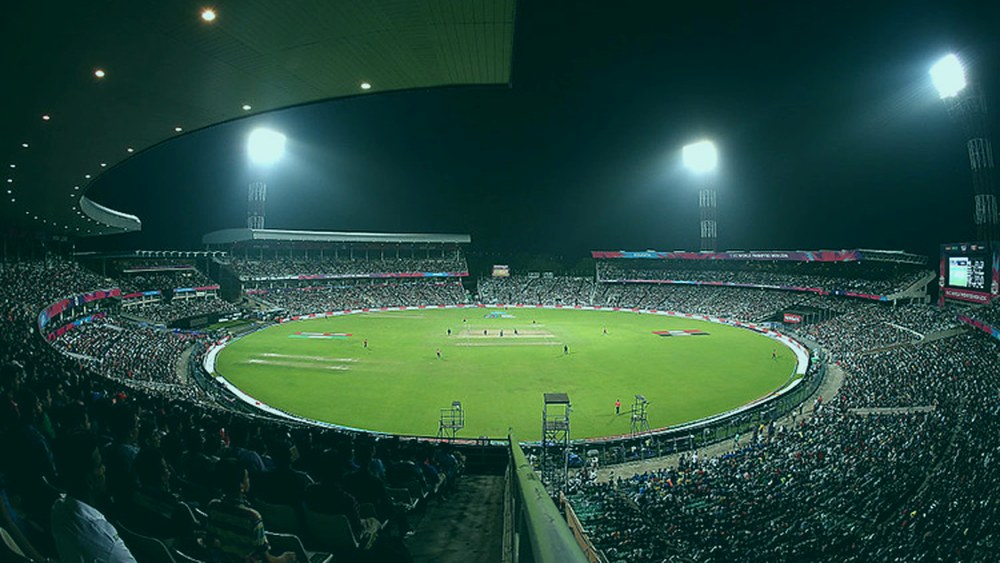
Eden Gardens (Kolkata). Historically the second-most-friendly venue for death-bowler wickets in the IPL. The red-soil pitch grips under lights, the ball stops on the slower cutters, and chasing teams tend to be 70-90 runs short of par by the 17th over. A 4-over spell at Eden routinely produces 2-3 wickets and concedes 24-32 runs. Captain any Profile 1, 4, or 5 bowler here without hesitation.
Wankhede (Mumbai). The flattest batting venue in India, but also the most bowler-friendly death venue once the dew settles in the second innings. Reverse swing (Profile 4) spikes from 18:00 onwards; batters swing harder against the older ball, miss more, and get caught at deep mid-wicket and long-on. Captain a left-arm quick (Profile 3) or a reverse-swing veteran (Profile 4) at Wankhede and you are picking from the top 3 venue-leverage spots in the IPL.
M. Chinnaswamy (Bengaluru). The shortest square boundaries and the highest first-innings averages. Death-bowler captain picks are higher variance here — the bowler can either take 3/18 or go for 0/52. The selection rule is simple: only captain a death bowler at Chinnaswamy if he is a Profile 1 yorker-king specialist (Bumrah, Pathirana, Natarajan). Anyone else gets bowled into the stands.
Arun Jaitley (Delhi). The capital's redeveloped square boundaries (now 65m instead of 58m) have made it the most batter-friendly venue in IPL 2025-26. Skip death-bowler captain picks here unless your analysis specifically favours one profile — the venue is made for chasing totals of 220+, not for 4-wicket hauls.
MA Chidambaram (Chennai). The slow turner of the IPL. Death-bowler captain picks at Chepauk favour Profile 5 (wrist-spin surprise package) and Profile 1 yorker-king specialists who can grip the ball off the surface. The venue's average first-innings score is 168, but the average death-overs economy for fast bowlers is 9.2 — actually higher than the overall IPL average. The spin advantage reverses for the death phase.
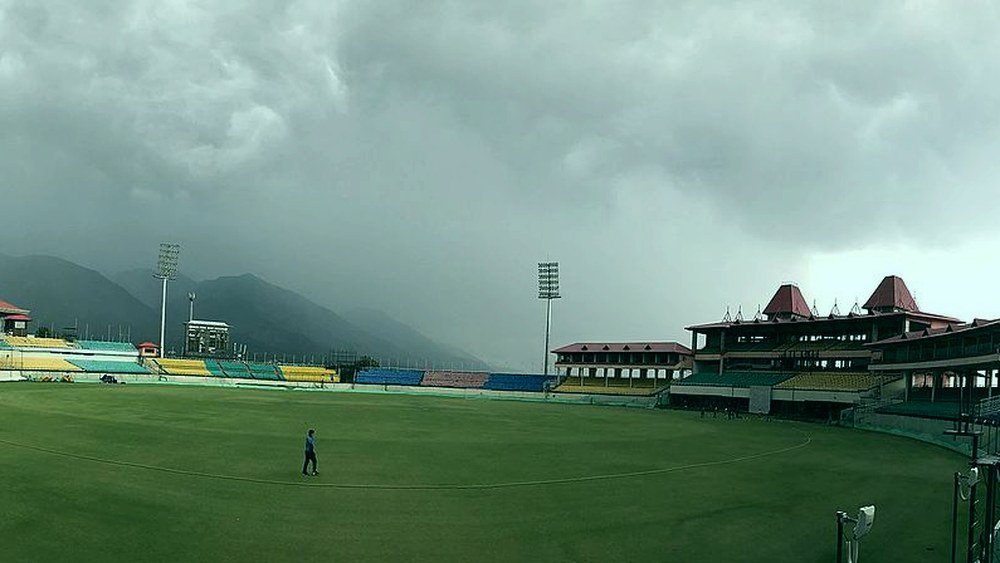
Smaller grounds — Dharamsala, Lucknow, Hyderabad. Smaller boundaries inflate batting but also inflate death-bowler wicket hauls because batters swing harder from the 18th over. Captain a Profile 2 slower-ball disruptor at Dharamsala and a Profile 4 reverse-swinger at Lucknow and Hyderabad — these venues reward specialist death skill with 2-3 wickets per match.
The 90-minute pre-toss checklist for death-bowler captaincy
Death-bowler captain picks require a 90-minute pre-toss ritual. Run through this checklist before every contest locks on Cricplay.
Step 1 — Identify the death bowlers in both XIs (60 minutes before toss). Check the playing XI confirmation as soon as it surfaces. The death-bowler slots are positions 4-6 of the bowling rotation. For most IPL 2026 teams, the death-bowler slots are filled by 2-3 specialists: a yorker-king (Profile 1) and either a slower-ball (Profile 2) or a left-arm quick (Profile 3). The Cricplay player profile tags "DEATH" specifically on cards whose recent role is the 17-20 over phase.
Step 2 — Cross-reference the opposing batting order (45 minutes before toss). Identify the top-5 batters the death bowler will face in the 17-20 over phase. Matchup matters: a left-arm quick (Profile 3) is more dangerous against 4+ right-handers; a yorker-king (Profile 1) is more dangerous against batters weak against the wide-off-stump line. Skip the death-bowler captain if the opposing batting order is missing its top-4 batters (injury, rest, international duty) — the death phase becomes lower stakes, lower wicket probability, and lower ceiling.
Step 3 — Venue filter (30 minutes before toss). Run the venue matchup from the section above. Eden, Wankhede, Dharamsala = green light. Chinnaswamy, Chepauk = conditional light (only Profile 1 / 5). Delhi = red light unless specific conviction.
Step 4 — Ownership sweep (15 minutes before toss). Open the Cricplay captain ownership tab. If your death-bowler captain is under 15% captain ownership and the opposing team has a top-5 batting order with 4+ batters weak against the bowler's profile, lock it in. If ownership is 30%+, fall back to a chalk pick.
Step 5 — Match-condition check (5 minutes before toss). Dew, humidity, and pitch behaviour all swing the death-bowler advantage from one side to the other. Heavy dew in the second innings = the seam bowlers lose grip, the wrist-spinners gain grip, and Profiles 5 and 7 spike. Dry conditions = Profile 1 and Profile 4 spike. Hot, flat, sunny afternoon match with no dew forecast = skip the death-bowler captain entirely; go with a top-order batter.
How Cricplay surfaces death-bowler data inside the app
Cricplay has built three lobby tools specifically for death-bowler identification. The first is the role card — bowlers whose last 5 matches show 3+ overs in the 17-20 phase carry a small red "DEATH" tag. The second is the bowling phase breakdown on each player profile — tap any bowler, scroll to "Phase splits", and you see their economy, dot-ball percentage, and wickets-per-over in the powerplay (1-6), middle (7-15), and death (16-20). The third is the "Matchup view", which shows the bowler's economy and wicket probability against each batter in the opposing XI's likely batting order.
None of these tools tell you which bowler to captain. What they do is compress your research window from 30 minutes to under 5. You can shortlist three death-bowler captains in the time the casual player takes to copy the top-3 captain list. That time advantage compounds across 74 matches.
Bankroll management for death-bowler captain picks
Death-bowler captain strategies are higher-variance than chalk batter strategies. You will finish top-50 in some mega contests, and you will finish 30,000th in others where your captain went 0/45 because the batters hit out cleanly. The discipline is bankroll allocation. Most serious Cricplay players run death-bowler captain builds in 35-45% of their mega entries and chalk-batter captain builds in the remaining 55-65%. The differential entries pay for themselves when they hit; the chalk entries keep you in the game every week.
A second discipline is contest selection. Do not play death-bowler captains in contests with under 1,000 entries — the prize pools are too small to justify the variance. Save them for the 10,000+ entry mega formats, the 50,000-entry IPL special events, and the 100,000-entry season finale. The variance is the same; the rewards are 20-50x larger.
Common death-bowler captain mistakes and how to avoid them
The first mistake is over-valuing wickets-per-match without checking the venue. A bowler with a 1.8 wickets-per-match average in the IPL is the same bowler with a 0.8 average at Chinnaswamy and a 2.6 average at Eden. Run the venue filter first.
The second mistake is double-differential captain + vice-captain at the death slot. If you captain a 9% death-bowler and vice-captain another 9% death-bowler from the opposing team, your downside when both fail is catastrophic. Run a 9% death-bowler captain with a 25% top-order batter vice-captain, or vice-versa, so your team has at least one anchor if the death phase goes awry. Pure double-differential death teams win mega contests roughly 1 in 80 mega entries; mixed captain/vice builds win at 1 in 30.
The third mistake is death-bowler captain fatigue. Chasing a death-bowler captain every single match for 74 matches burns through your bankroll before the playoffs. Pick your spots — dew-heavy evening matches, reverse-swing-friendly venues, and matches where the opposing team has an ageing or injury-depleted batting order. Skip the routine flat-batting day matches where the top-order batters sweep the death phase.
The fourth mistake is ignoring the role-change log. A bowler who bowled only at the powerplay in match 5 may be the team's designated death bowler by match 35. Cricplay's role-change log on each player profile flags this — tap it before every contest to see whether the role you remember is still the role they have today.
Putting it together — your IPL 2026 death-bowler captain plan
Open Cricplay the night before every match and shortlist three death-bowler candidates by reading their phase splits. Cross-check the venue, the opposing batting order, and the dew forecast the next morning 90 minutes before toss. Lock the highest-conviction one as captain in 35-45% of your mega entries, and run a chalk top-order batter captain in the rest. Track every death-bowler captain pick in a spreadsheet — what you picked, the venue, the opposing batting order, the final score, the rank uplift — and after 15 matches you will know which of the seven profiles works for your reading style.
The 74-match IPL 2026 schedule gives you roughly 35-40 high-leverage death-bowler captain windows. Even if your hit rate is a modest 30%, that is 10-12 mega contest top-500 finishes — which on Cricplay's prize structure pays Rs 50,000-Rs 5,00,000 per hit depending on the contest size. The math works. The process works. The only variable is whether you commit to running the checklist every match.
If you want a head start, we have already mapped the seven profiles to specific player names in our fantasy cricket hub — including the yorker-king specialists on flat tracks, the slower-ball disruptors on slow surfaces, and the wrist-spin packages who will enter high-leverage windows during the second half of the season. The hub refreshes weekly through IPL 2026, so bookmark it and check back after every matchday. The death-bowler edge is real, but only for players who do the work.
Play fantasy cricket on Cricplay
Download the Cricplay app and join IPL 2026 mega contests with Rs 100 welcome bonus.